

Market news
Does Your Build Count as a New Build Under the 2027 Negative Gearing Rules?
TL;DR: From 1 July 2027, negative gearing on residential property is limited to new builds. Buy an established home after budget night (7:30pm, 12 May 2026) and your rental losses can only be offset against other rental income, not your wages. A new build stays fully negatively gearable against all income. A new build means a home on previously vacant land, or a knock-down that replaces one dwelling with more dwellings. A same-footprint rebuild does not count, a renovation does not count, and the concession follows the first investor buyer only. At the same time, the 50 per cent CGT discount is replaced with indexation plus a 30 per cent floor, with a deemed valuation on 1 July 2027. Anything you already held on budget night is grandfathered.
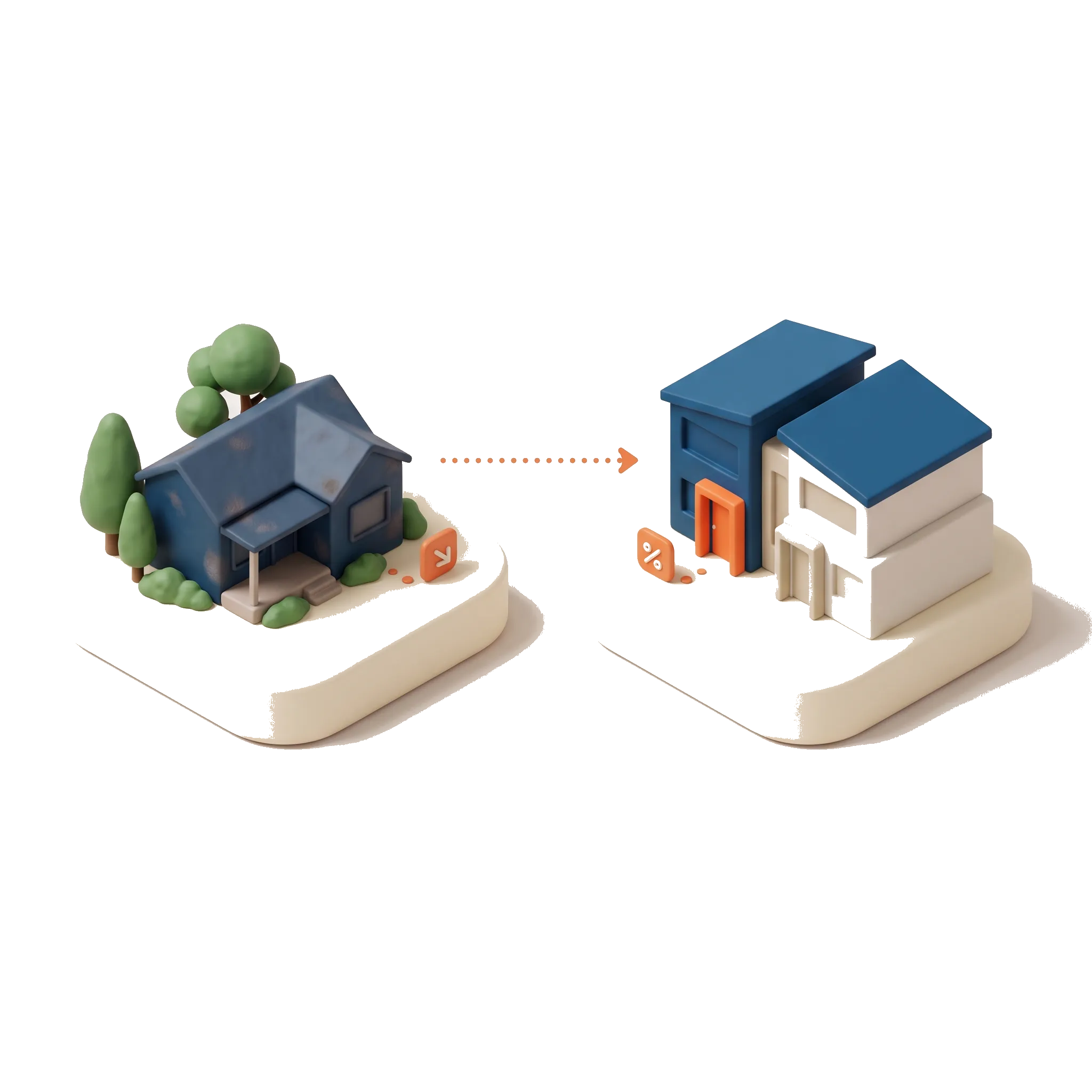

Here is a question worth sitting with for a moment. If, from a fixed date, the only home in the country you could negatively gear was a brand-new one, what would that quietly do to where the money goes?
That is not a thought experiment any more. On budget night, at 7:30pm on 12 May 2026, the Treasurer drew a line through the property tax system, and the Treasury Laws Amendment (Tax Reform No.1) Bill 2026 passed the Senate on 25 June. Both changes start on 1 July 2027. Most of the coverage has told you the politics. Very little of it has told you the part that actually decides whether your next project or purchase works: what counts as a new build, and what doesn’t.
So let us do that properly, because the whole reform hangs on a definition, and the definition is narrower than most people assume.
What actually changed, in four sentences
Two things changed, and they arrive together.
Negative gearing on established residential property is being wound back. If you buy an existing home as an investment after budget night, your net rental loss can no longer be deducted against your salary; it can only be offset against other residential rental income, with anything left over carried forward to future years. New residential builds are carved out and stay fully negatively gearable against all your income, the way property has worked for decades. And the 50 per cent capital gains tax discount is being replaced with an inflation-indexed method and a minimum 30 per cent rate on the real gain.
Simply put, from 1 July 2027 the tax system stops rewarding you for buying the house next door and starts rewarding you for adding a house that wasn’t there before.
The three dates that matter
There is a lot of noise about “2027”, so here are the only dates you need to hold in your head.
7:30pm AEST, 12 May 2026. Budget night, and the line in the sand. Anything you owned before this moment is grandfathered and keeps the old rules. Anything you buy after it falls under the new regime once it starts.
25 June 2026. The Bill passed the Senate, so this stopped being a proposal and became legislation. That is the day it became safe to plan around.
1 July 2027. The new rules commence, and the deemed capital gains tax valuation happens. You have, at the time of writing, roughly eleven months before the switch flips.
What counts as a new build
This is the part almost nobody has written plainly, so here it is as a straight answer, then the working underneath it.
On the ATO’s guidance and the way tax advisers are reading it, a new build is one of two things:
| The project | New build? | Why |
|---|---|---|
| House built on previously vacant land | Yes | It adds a dwelling that wasn’t there |
| Knock down one house, build three townhouses | Yes | Net supply went up by two |
| Knock down one house, build one house (same footprint) | No | A replacement, not new supply |
| Substantial renovation of an existing home | No | The dwelling already existed |
| Buying an established home to rent out | No | This is exactly what the reform targets |
The test that ties all of that together is simple: did the number of dwellings go up? Vacant land to a house, one dwelling to three, an old cottage to a duplex. Supply increased, so the concession applies. Take one house away and put one house back, and nothing was added, so it doesn’t.
Here is the bit that surprises most people. The concession is designed to follow the first investor purchaser of that new dwelling. Build it or buy it new and negatively gear it, and you get the treatment. Sell it to the next investor five years later, and on the current reading they do not inherit new-build status, because to them it is no longer new. The tax advantage is attached to the newness, and newness only happens once.
Please be careful with that one. It is easy to model a resale in a spreadsheet as though the buyer gets everything you got. On this reform, they may not, and that changes the pool of people who will pay full price for your finished stock.
The trap in a same-footprint rebuild
I want to slow down on the knock-down rebuild, because it is where good operators will lose money by assuming.
A knock-down rebuild feels new. It is a brand-new house, new slab, new everything, and every instinct says that must be a new build. But if you removed one dwelling and replaced it with one dwelling, the reform does not see new supply. It sees a swap. On the current reading that home is treated like an established property for negative gearing, and your buyer’s ability to deduct losses against their wages goes with it.
Change the plan so that one dwelling becomes two, and the same block, the same builder and the same street now produces a qualifying new build. The difference between “no” and “yes” here is not the quality of the house. It is the dwelling count. That is a design decision you make at the feasibility stage, long before the first excavator arrives, which is precisely why it belongs in the numbers from day one. Our development feasibility walk-through is where a line like this either shows up early or bites you late.
The capital gains side, without the fog
The CGT change has been reported accurately by the law firms and unreadably by almost everyone. Here is the plain-English version.
Today, if you hold an asset longer than twelve months, you get a 50 per cent discount on the gain. From 1 July 2027, individuals lose that flat discount and instead get two different things. First, your cost base is indexed for inflation, so only the real gain, the bit above inflation, is taxed at all. Second, a minimum 30 per cent rate applies to that real gain.
The headline everyone will repeat is “the 50 per cent discount is gone”. But the number that actually matters to you is not the discount rate. It is how much of your gain was inflation and how much was real. In a low-inflation, high-growth run, indexation shelters very little and the new method can cost you more than the old discount did. In a high-inflation, modest-growth run, indexation can shelter a lot, and a long-held asset might not be worse off at all. The reform swaps a simple rule you could game with a holding period for one that tracks the economy you actually earned the gain in.
Two things soften the blow. Growth you have already earned is protected by a deemed valuation on 1 July 2027, so this is not retrospective; the clock on the new method starts from that day’s value. And a new dwelling comes with an election to stay on the old 50 per cent discount if that suits it better. None of this is a crystal ball, and the ATO’s detailed guidance will refine the edges. But the direction of travel is not subtle: hold periods matter less now, and what you build matters more. We walk the full capital gains maths through, with a worked example, in the new capital gains tax rules for property.
The number the whole reform points at
Step back from the mechanics and there is one sentence that carries the strategy.
From 1 July 2027, the only residential asset in Australia you can fully negatively gear is a new build.
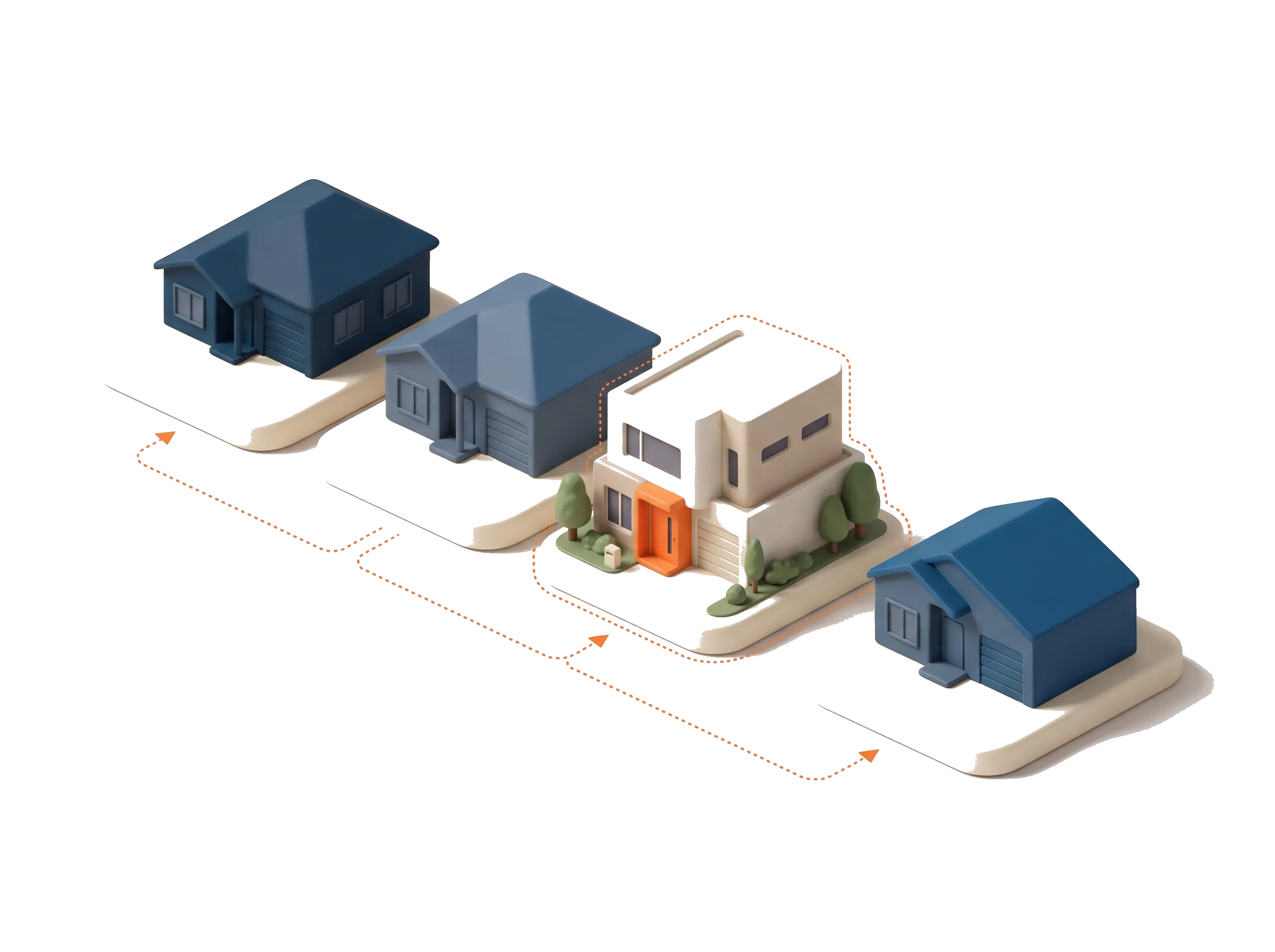
That is not a small tweak to a deduction. It is a structural nudge to an entire market, and the property industry has said so out loud. Writing in Domain, Place Estate Agents chief executive Damian Hackett noted the reforms are likely to “shift future investor demand toward new housing and apartment supply” rather than trigger broad price falls. Not everyone agrees on the size of the effect, and they are right to argue it. Ray White’s Dan White made the fair point that “a brand-new apartment in an outer growth corridor does not replace a rental home near a school, hospital or train line”, and others have warned the change could tighten rents if supply does not respond. That tension is real, and worth reading both sides of.
But for an investor deciding what to do with capital in the next eleven months, the tax code has quietly answered a question it used to leave open. It now pays you to fund new supply. That is the same maths behind manufacturing capital growth through co-development, where the return comes from the build itself rather than from waiting on the cycle, and it is why the national housing shortfall and this tax change point in the same direction. When the shortfall and the tax settings agree, that is usually worth paying attention to.
What this means if you are building, or buying
If you are a developer, the dwelling count on your next feasibility just became a tax feature, not only a yield one. A plan that adds dwellings produces stock your buyers can negatively gear; a same-footprint rebuild produces stock they cannot. Design accordingly, and say so in your marketing, because from 2027 “fully negatively gearable” is a genuine selling point that established stock down the road cannot match.
If you are an investor, the question is no longer only “where is the growth”. It is “does this asset still carry the concession, and am I the first buyer of it”. Buying new, and buying it first, is where the tax settings now sit. Buying at developer cost price so the equity is built in on the way through is one way to do that without paying a retail premium for the privilege. And if you want the ways an everyday investor actually gets one of these new builds, we set them out here.
And if you would rather understand the machine than the headline, the interest-rate and building-approvals reads sit alongside this one in our property market news, and the free Manufactured Equity Calculator lets you run your own numbers on a new build before you commit to anything. Whatever you do, get the new-build call in writing from a registered tax agent first. On this reform the difference between “yes” and “no” is one design decision, and it is worth a phone call to get right.
General information only. Nothing here is financial, credit or tax advice, and it is a plain-English summary of reforms whose detailed ATO guidance is still settling. Your circumstances are your own, and past results are not a promise of future performance. Speak with your registered tax agent or licensed adviser before acting.
Frequently asked questions
Is negative gearing being abolished in Australia?
Not entirely. From 1 July 2027, negative gearing is limited to new residential builds. If you buy an established home as an investment after 7:30pm AEST on 12 May 2026, your net rental losses can only be offset against other residential rental income, not against your salary or other income, and any unused loss is carried forward. New builds are carved out and remain fully negatively gearable against all income. Anything you held before budget night is grandfathered under the old rules. This is general information, not tax advice.
Does negative gearing still apply to new builds after 2027?
Yes. A new residential build is specifically carved out of the changes and remains fully negatively gearable, meaning losses can still be deducted against your other income such as wages. That carve-out is the entire point of the reform: the Government has said it wants to focus the tax concession on new housing supply rather than the purchase of existing homes.
What counts as a new build under the 2027 negative gearing rules?
Based on the ATO's guidance and the way advisers are reading it, a new build is a dwelling constructed on previously vacant land, or a demolish-and-replace that produces a greater number of dwellings than were there before (for example, one old house removed and three townhouses built). It generally applies to the first investor who buys that new dwelling. Confirm your specific situation with a registered tax agent, because the fine detail sits with ATO guidance.
Does a knock-down rebuild qualify for negative gearing?
Only if it increases the number of dwellings. Knocking down one house and building one house on the same footprint is treated as a replacement, not new supply, so on the current reading it does not qualify as a new build. Knocking down one house and building two or three does add supply and, on that reading, would qualify. Substantial renovations do not qualify either. This is exactly the kind of line where you want written advice before you commit.
What is happening to the capital gains tax discount in 2027?
From 1 July 2027 the 50 per cent CGT discount for individuals is replaced with two things: indexation of your cost base for inflation, and a minimum 30 per cent tax rate on the real gain. Only the gain above inflation is taxed. Gains that accrued before 1 July 2027 are protected by a deemed valuation on that date, so the change is not retrospective. New dwellings get an election to stay on the old 50 per cent method.
Are my existing investment properties affected by the changes?
If you held the property before 7:30pm AEST on 12 May 2026, you are grandfathered: the old negative gearing and CGT rules continue to apply to it. The new rules bite on residential property acquired after that moment. The CGT valuation on 1 July 2027 also protects the growth you have already earned. Everyone's position is different, so check yours with your accountant.