

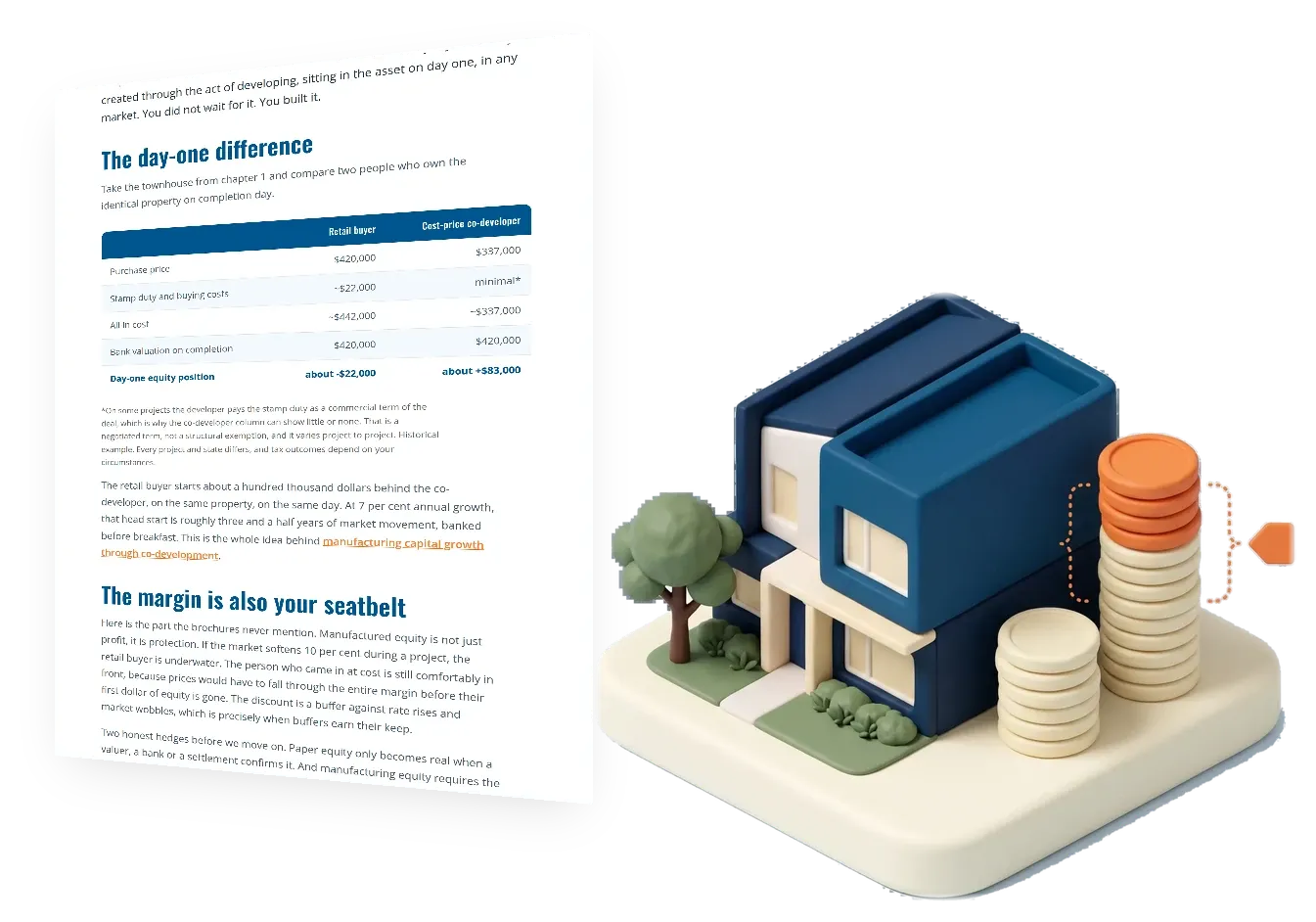
Development works on a different physics. You buy land, add approvals, add construction, and if the feasibility was right, the finished asset is worth more than everything it cost to create. That surplus is the developer’s margin from chapter 1, and it has a more useful name: manufactured equity. Growth you created through the act of developing, sitting in the asset on day one, in any market. You did not wait for it. You built it.
The day-one difference
Take the townhouse from chapter 1 and compare two people who own the identical property on completion day.
| Retail buyer | Cost-price co-developer | |
|---|---|---|
| Purchase price | $420,000 | $337,000 |
| Stamp duty and buying costs | ~$22,000 | minimal* |
| All-in cost | ~$442,000 | ~$337,000 |
| Bank valuation on completion | $420,000 | $420,000 |
| Day-one equity position | about -$22,000 | about +$83,000 |
*On some projects the developer pays the stamp duty as a commercial term of the deal, which is why the co-developer column can show little or none. That is a negotiated term, not a structural exemption, and it varies project to project. Historical example. Every project and state differs, and tax outcomes depend on your circumstances.
The retail buyer starts about a hundred thousand dollars behind the co-developer, on the same property, on the same day. At 7 per cent annual growth, that head start is roughly three and a half years of market movement, banked before breakfast. This is the whole idea behind manufacturing capital growth through co-development.
The margin is also your seatbelt
Here is the part the brochures never mention. Manufactured equity is not just profit, it is protection. If the market softens 10 per cent during a project, the retail buyer is underwater. The person who came in at cost is still comfortably in front, because prices would have to fall through the entire margin before their first dollar of equity is gone. The discount is a buffer against rate rises and market wobbles, which is precisely when buffers earn their keep.
Two honest hedges before we move on. Paper equity only becomes real when a valuer, a bank or a settlement confirms it. And manufacturing equity requires the development to actually succeed, which is the subject of the next seven chapters. None of this is free money. It is earned money, and the question is who does the earning.